The Durbanville Wine Route is the closest full wine region to Cape Town, let alone the West Coast: roughly 20 minutes inland from the city centre and well under half an hour from Blouberg, against 45 minutes or more to reach Stellenbosch. It’s a compact cluster of family-run estates in the Tygerberg Hills built on cool-climate Sauvignon Blanc, which is exactly what makes it the easiest full wine experience to fit into a half-day out of a West Coast base.
Why Durbanville Beats Stellenbosch or Franschhoek for a Half-Day Out
Stellenbosch is South Africa’s oldest and biggest wine route, with well over 150 wineries spread across a town and valley system roughly 50km from Cape Town, about 45 minutes’ drive. Franschhoek sits further still, often over an hour from the West Coast once you’ve cleared the N1 and climbed Helshoogte or routed via Somerset West. Both deserve a full day, and the various ways to get to Stellenbosch are worth knowing if that’s the plan on another day.
Durbanville solves a different problem: an afternoon, not a day trip. Its estates sit only a few minutes’ drive apart in the Tygerberg Hills, so two or three unhurried tastings and a lunch are realistic, with time to be home before the evening wind picks up. It’s the route that fits around an ordinary Saturday rather than requiring one built entirely around it.
Getting There From Blouberg and the West Coast
From Bloubergstrand or Table View, the drive runs inland rather than down the coast. Take the M14 east through Table View and Bothasig to cross the N7, then pick up the M13 (Tygerberg Valley Road), which leads straight into the valley. Allow 20 to 25 minutes outside peak traffic.
The farmland between Blouberg and Durbanville is known in the trade as Sauvignon Blanc country, so the drive out previews the terrain that ends up in the glass. It’s also a handy inland escape on a howling southeaster day: the wind that flattens the Blouberg beachfront is far gentler once you’re tucked into the Tygerberg hills, and Durbanville is a solid plan B alongside the usual indoor options for a windy day.
What Makes Durbanville’s Wine Worth the Detour
Durbanville’s wine history runs deep. Diemersdal’s land was granted by Governor Simon van der Stel in 1698, with formal wine production from 1705 and the Louw family in charge since 1863, now six generations in. Meerendal has produced wine on the same ground since 1702, and is home to a Muscat d’Alexandria vine row dating to the late 1930s that’s certified as Cape Town’s oldest producing vineyard, alongside a separate Pinotage Heritage Block planted in 1955. De Grendel’s farm dates to 1720 and has been in the Graaff family for four generations.
The valley’s cool, maritime-influenced climate, cooled by the same Atlantic air that keeps Blouberg breezy, is what gives its Sauvignon Blanc such consistent sharpness and citrus character. Chenin Blanc, Shiraz and Pinotage also do well here, in a style distinct from the warmer, more structured reds Stellenbosch is better known for.
The Half-Day Route: Three Stops, Not Six
The estates sit close enough to tempt a full crawl, but a realistic half-day means two tastings and a lunch, not five. A workable order, starting from the Blouberg side:
- Late morning: De Grendel, just off Plattekloof Road and the first proper stop after the N7, has a tasting area looking out over vines, a dam and Table Mountain’s silhouette. A gentle way to start before the day gets serious.
- Midday: Diemersdal or Durbanville Hills for a more focused tasting. Diemersdal’s reputation rests on serious Sauvignon Blanc under sixth-generation winemaker Thys Louw, while Durbanville Hills runs structured food-and-wine pairings if you’d rather not improvise lunch.
- Early afternoon: Nitida or Meerendal to finish, both with restaurants on site. Nitida’s Cassia Restaurant is built on a wide deck that extends out over the estate’s dam, while Meerendal runs several dining options including a heritage kitchen and a chocolatier. Head back via the M13 and N7 while there’s still daylight.
Whoever is driving should stick to tasting pours rather than full glasses, or book a table at one of the on-site restaurants and let someone else take the wheel home.
The Estates, With the Practical Details
Hours and prices change, so treat the details below as a guide as of 2026-10-20 and check ahead before you go.
| Estate | Known for | Tasting hours | Typical cost |
|---|---|---|---|
| De Grendel | Table Mountain views, historic 1720 farm | Mon-Sat 09:00-17:00, Sun 10:00-16:00 | Tasting fee applies; check ahead |
| Durbanville Hills | Large-scale tastings and food pairings | Mon 12:00-19:00, Tue-Fri 10:00-19:00, Sat/public holidays 10:00-17:00, Sun 11:00-17:00 | From around R70 (chocolate pairing) up to R135 (awards tasting); Rhinofields food pairing about R120, booking advised |
| Diemersdal | Serious Sauvignon Blanc, The Farm Eatery | Mon-Sat 09:00-17:00, Sun 10:00-15:00 | Tasting fee applies; check ahead |
| Nitida | Cassia Restaurant on a deck over the dam | Mon-Fri 09:30-17:00, Sat 11:00-16:00, Sun/public holidays 11:00-15:00 | Tasting fee applies; check ahead |
| Meerendal | Oldest producing vineyard in Cape Town, several restaurants | Daily: Nov-Apr 10:00-18:00, May-Oct 10:00-17:00 | Tasting fee applies; check ahead |
All five belong to the official Durbanville Wine Valley association, which lists around a dozen member estates in total, including D’Aria, Hillcrest, Klein Roosboom and Groot Phesantekraal, if you want to extend beyond a single half-day visit.
When to Go
Spring, which is where Cape Town sits right now in late October, is a good window: vines are leafing out, the valley is green, and the estates are quieter than they’ll be over the December-January peak. Harvest typically runs from February to April, when cellars are busiest and tours get more interesting, though tastings often have to be booked around work in progress.
Weekday visits mean shorter queues at the popular tasting rooms and a better chance of a restaurant table without booking ahead. If cost is a factor for the whole trip, October’s case as Cape Town’s cheapest month extends to wine tasting too, since most estates aren’t yet running peak-season pricing.
FAQ
Is the Durbanville Wine Route free to visit?
Driving the route costs nothing, but tastings aren’t usually free. Expect roughly R70 to R150 per person for a standard tasting or pairing, as of 2026-10-20; always check current pricing with the estate before you arrive.
How many wine farms are on the Durbanville Wine Route?
The Durbanville Wine Valley association lists around a dozen member estates, though most sit close enough together that a realistic visit covers two or three in a half-day rather than trying to see them all.
Is Durbanville or Stellenbosch better for a day trip from the West Coast?
For convenience, Durbanville wins: it’s roughly half the drive time and the farms sit close together, so less time is lost to the road. Stellenbosch wins on scale and choice if you’ve got a full day and want the country’s biggest wine route.
Do you need to book wine tastings in advance?
A casual tasting at most estates doesn’t need a booking on weekdays, but food pairings, restaurant tables and weekend visits are safer booked ahead, especially at busier estates like Durbanville Hills and Meerendal.
What’s the best time of year for Durbanville’s wines?
Sauvignon Blanc from the current vintage is usually at its freshest in the months just after the February to April harvest. The valley also runs occasional spring and early-summer Sauvignon Blanc tasting events; check the Durbanville Wine Valley association’s calendar for dates.
Sources & further reading
- Durbanville Wine Valley (official route association)
- De Grendel Wines (official)
- Diemersdal Wine Estate (official)
- Meerendal Wine Estate (official)
- Durbanville Hills Pairings
- Cassia at Nitida
- Explore the Durbanville Wine Route – Cape Town Tourism
- M14 (Cape Town)
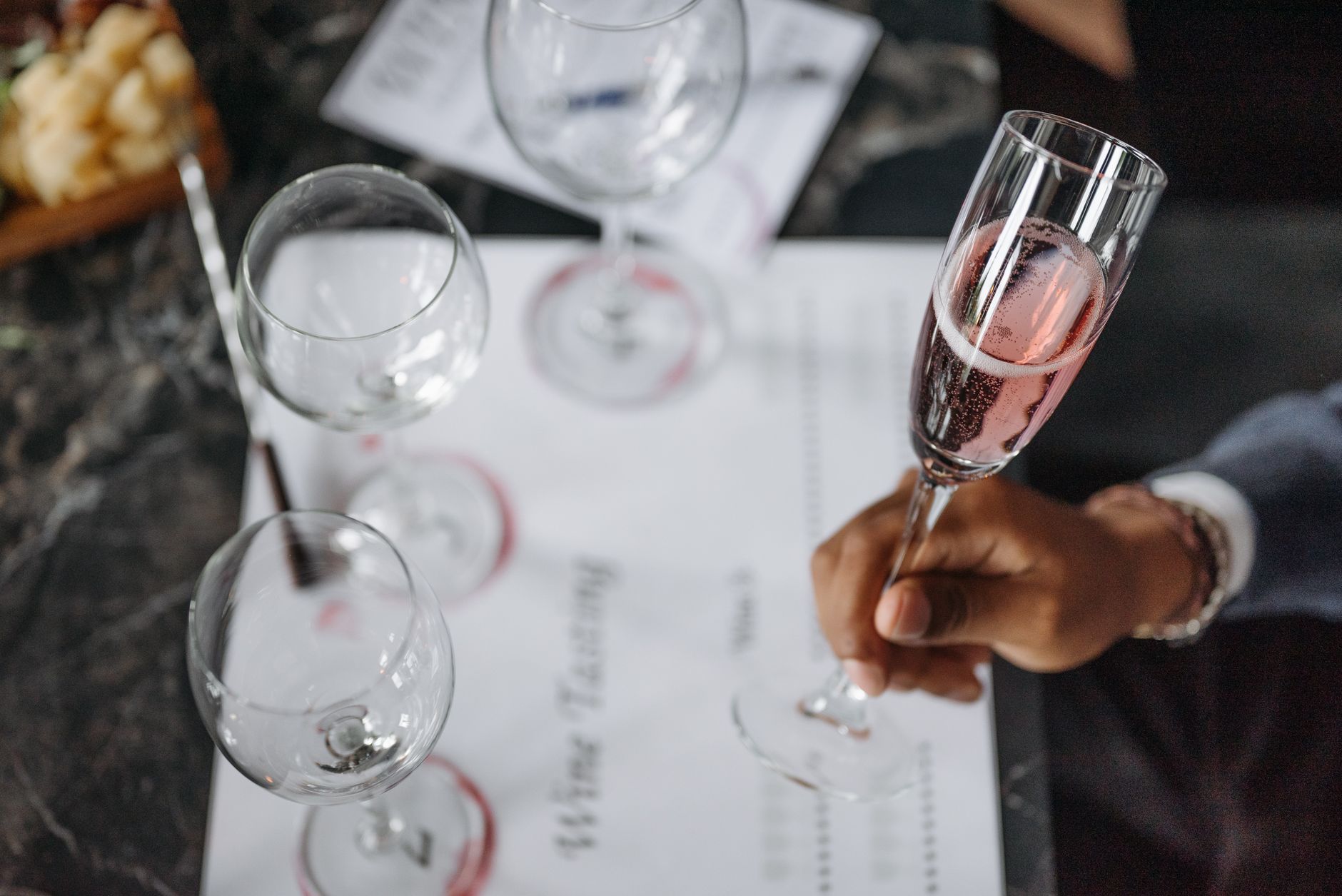
Featured image: A close-up of a wine tasting setup with glasses and a hand holding champagne. by Pavel Danilyuk, via Pexels — Pexels License (free commercial use)