If you are planning a November-to-February kite season in Cape Town, August is not early to book. It is on time, barely. The properties kiters actually want, the ones where you can carry a pumped kite to the water, get snapped up by returning Europeans who rebook the same flat every year, and by October the walk-to-launch stock is largely gone. This guide maps the area properly: which zones let you skip the car, what the different accommodation types cost, and the questions worth asking before you pay a deposit.
One orientation note first. Everything in this article sits on Table Bay, the coastline north of the city centre that runs from Milnerton through Sunset Beach, Table View, Bloubergstrand and Big Bay. This is where the kite spots are. It is not where most first-time visitors assume they should stay, which brings us to the single most expensive mistake in Cape Town kite trips.
The one rule: base yourself on the Table Bay side
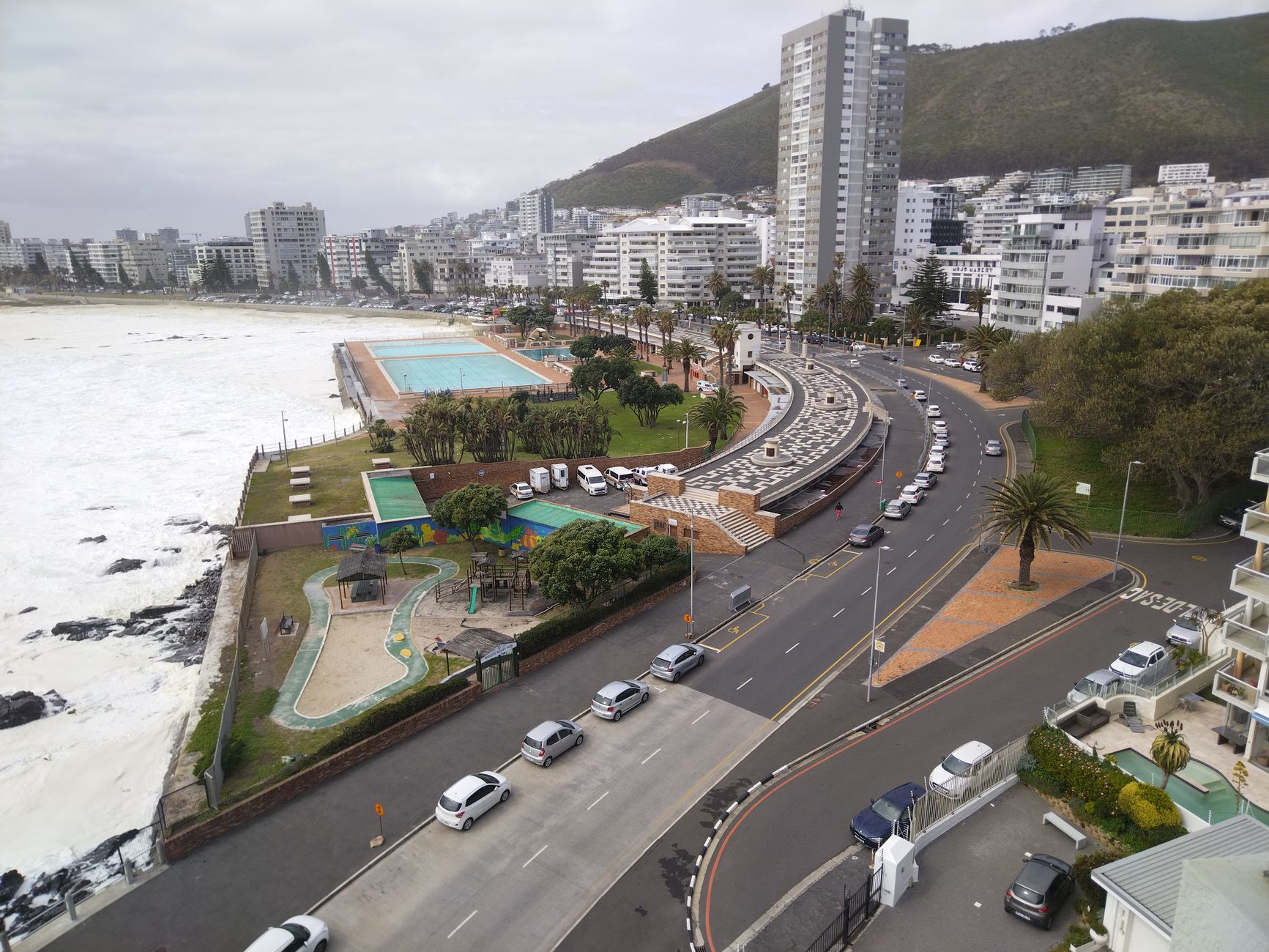
Sea Point, Green Point and the City Bowl look ideal on a map: restaurants, the promenade, Table Mountain overhead. For a kiter they are the wrong base. The launch spots are all on the opposite side of the bay, a 20-25 km drive from Sea Point, and while that reads as under half an hour with empty roads, you will not have empty roads. The southeaster typically builds through the day and peaks mid-to-late afternoon, exactly when you want to be rigging, and exactly when traffic out of town thickens. Do that round trip daily for a month, with wet gear, and the glamour wears off fast.
There is also a wind logic to it. The Cape Doctor, the summer south-easterly, serves the Table View coastline cleanly and reliably. In high season the main strip sees kiteable wind most days of the week, commonly in the 20-35 knot range. Staying beside the spot means you can watch the water, walk down when it fills in, and come home when your arms give out. Staying in town means committing to a session before you have seen the beach. The full trade-off between the two sides is covered in Blouberg or Sea Point: which side of Cape Town should you stay on?, but for a kite trip the verdict is short: Sea Point is for the last two nights of your holiday, after the gear is packed.
The walk-to-launch zones, ranked
1. Table View beachfront: the default, for good reason
The stretch of Marine Drive running past Kite Beach is the centre of gravity for the whole scene. Kite Beach sits between Dolphin Beach and the Table View main beachfront and is the busiest launch on the coast, with schools, freestylers and everyone in between. Apartment blocks line the road directly opposite the beach, and anything within three or four streets inland still counts as walkable with a pumped kite. You also get the practical stuff: supermarkets, kite shops, repair services and casual restaurants within walking distance. If it is your first season, stay here. The compromise is atmosphere; Table View is functional suburbia rather than pretty, and the beachfront road is busy in summer.
2. Dolphin Beach and Sunset Beach: quieter, still on the sand
South of Kite Beach, the Dolphin Beach area offers a similar walk-to-water setup with slightly fewer people on the sand, though in January the water itself is anything but quiet: on peak days this stretch carries one of the biggest kite crowds anywhere. Further south again, Sunset Beach is a residential suburb of larger houses between the dunes and the lagoon-side wetlands. It is the first spot in the bay to pick up a south-easter, which is handy, though the wind close to launch can be gustier than up the coast. Sunset Beach suits groups renting a whole house who want space and a quieter street, accepting a short drive or long walk to the main Kite Beach scene.
3. Big Bay: waves, a newer feel, big-air country
Big Bay, at the northern end past Bloubergstrand, is the amphitheatre where Red Bull King of the Air was staged from its 2013 relaunch until 2017, before the event moved along the coast to Kite Beach. The bay produces organised, clean wave sets with flatter water between them, which makes it the pick for wave riders and anyone chasing big air. Accommodation is mostly modern apartment complexes and guesthouses off Otto du Plessis Drive and the surrounding grid, much of it built in the last two decades, and several kiter-focused lodges operate here. It feels newer and more resort-like than Table View. Downside: you are at one end of the strip, so sessions at Kite Beach or Sunset mean driving.
4. Bloubergstrand village and West Beach: charm over convenience
The old Bloubergstrand village, with its low whitewashed houses and seafood restaurants, is the prettiest place to sleep on this coast and delivers the postcard view of Table Mountain across the water. Launching directly in front of the village is less straightforward than at the dedicated kite beaches, so treat it as a near-the-action base rather than a walk-to-launch one. A fuller breakdown of these micro-areas, including the inland suburbs, is in our Blouberg micro-area guide.
What about staying inland in Parklands or Sunningdale to save money? You can, and plenty of seasonal workers do, but you reintroduce the car dependency you came here to avoid, for a saving that often is not dramatic once you are splitting a beachfront flat between two or three kiters.
Kite house, guesthouse or self-catering flat?
Kite houses. The area has a genuine ecosystem of kiter-run accommodation: shared houses and lodges built around the sport, such as Cape Town Kite Club in Big Bay and several others between Sunset Beach and Bloubergstrand. You get an instant social circle, downwinder logistics sorted by people who do them weekly, and hosts who understand that a lounge will sometimes contain a drying wetsuit. Best for solo travellers and first-timers. Book directly and early; the well-run ones fill up months out.
Guesthouses and hotels. Conventional B&Bs and a handful of hotels sit along the beachfront strip. Fine for shorter trips of a week or two, less economical for a full season, and not all of them love sandy gear. Ask before booking.
Self-catering apartments and houses. The standard choice for anyone staying a month or more. The beachfront blocks along Marine Drive and the complexes in Big Bay are full of furnished units that cycle between long lets and seasonal visitors. As of August 2026, furnished one-bedroom flats in Table View list from roughly R14,000 a month on the property portals, with two-bedroom units mostly between about R13,000 and R17,000, and a room in a shared kite house coming in well under a one-bedroom flat. Expect beachfront positions and December-January dates to price well above those figures, and note that the kite season is the opposite of the discount season here: the winter long-stay bargains described in our monthly rentals guide evaporate precisely when the wind arrives. Negotiate on duration instead; a confirmed three-month booking is valuable to an owner, and many will move on price for it.
Questions to ask before you pay a deposit
- Where does gear live? A garage, lock-up or dedicated storeroom matters more than a sea view. Two people travelling with twin-tip and wave quivers arrive with a small van’s worth of kit.
- Is there somewhere to rinse and dry? An outdoor tap and a yard or balcony that catches sun will save your equipment and your deposit. Cape Town’s water restrictions come and go, so ask what is currently allowed rather than assuming a hosepipe.
- What is the actual walking distance to a launch? Get it in metres, not adjectives. “Close to the beach” can mean a 25-minute walk with 40 kg of gear.
- How good is the internet, really? Many seasonal kiters work European mornings and ride afternoons, which the wind pattern suits perfectly. Ask for a speed test screenshot and whether the building has backup power for load shedding; the situation has improved, but prolonged outages are not a solved problem, so check the current status before you commit.
- Is there secure parking? If you are hiring a car for downwinders and non-wind days, off-street parking should be non-negotiable.
- What are the December terms? Some owners carve the mid-December to mid-January peak out of longer bookings or reprice it. Better to know in August than at check-in.
Timing your booking from here
Working back from a season that starts in earnest in November: August and September are when returning kiters confirm their regular places, October is when the leftovers get picked over, and by November you are choosing between inland suburbs and inflated short-let pricing. If you are reading this in August 2026 with a Nov-Feb trip in mind, shortlist this week, ask the questions above, and put deposits down within the month. For flights, the shoulder weeks of early November and late February offer the same wind statistics as peak season with fewer kites on the water and better accommodation availability.
Kiter accommodation FAQ
Can I do a Cape Town kite season without a car?
Yes, if you stay on the Table View beachfront near Kite Beach, where launches, shops and food are all walkable. You will miss downwinders and trips to Langebaan or Haakgat unless you befriend someone with a bakkie, which, in fairness, is how most seasons work anyway. Ride-hailing covers airport runs and the odd night out in town.
Where should a beginner stay?
Table View beachfront, close to the schools at Kite Beach. Lessons often run at milder times of day and sheltered spots, and being able to walk to your lesson removes half the admin. Big Bay’s waves and Haakgat are not beginner venues.
Is Sea Point ever the right call?
Only if kiting is a minor part of a longer city trip and you are content to drive across the bay for the odd session. For anything gear-heavy or longer than a week, the daily commute against peak traffic makes it a poor trade.
How windy will it actually be?
In the December-February core, the south-easter delivers kiteable wind on most days, frequently 20-35 knots, usually building from late morning and peaking in the afternoon. November and March are slightly less consistent but noticeably less crowded. Pack small kites; a 7-9 m quiver covers most riders in high season.
Sources & further reading
- Wake Up Stoked: Kitesurf Cape Town spot guide
- Freeride Kitesurf: Cape Town, Blouberg and Big Bay spots
- Cape Town Kite Club
- Kitesurf Cape Town: Sunset Beach
- KiteKahunas: kitesurfing accommodation Cape Town
- Property24: apartments to rent in Table View
- Red Bull King of the Air
Featured image: Aerial view of a coastal road, playground, and urban skyline in Cape Town, South Africa. by Zacheus Van Rensburg, via Pexels — Pexels License (free commercial use)