There is a theory around here that you should only decide to move to Melkbosstrand in July. January is cheating. In January the beach is full, the Atlantic glitters, Table Mountain sits across the bay looking like a painting someone commissioned, and anyone would sign the transfer papers on the spot. July is the honest month: northwesters shoving rain at the windows, kelp heaped along the high-water mark, half the restaurants quiet by eight, and streets so still you can hear the surf from three blocks inland. If you like the village in July, you will love it all year. If July gets you down, believe that feeling and buy in Parklands instead.
This is the piece we would hand a friend weighing up the move: what the village actually offers, what the commute really costs, what living beside a nuclear power station means in practice, and where the money goes further than it does down the coast in Blouberg. Trade-offs included, brochure copy left out.
The village part is real
Melkbosstrand gets described as a fishing village that grew up, and for once the estate-agent line holds. The old core, the Avenues, still runs on a modest grid of streets between the main road and the sea, and the town takes its name from the melkbos itself, the milky euphorbia scrub that covers the dunes. We sit roughly 35 km north of Cape Town’s city centre, past the last of the Table View sprawl and a band of open strandveld that still separates the village from the rest of the metro. That gap matters more than it looks on a map. It is the reason Melkbos feels like a West Coast town that happens to fall inside Cape Town, rather than another suburb bleeding into the next one.
The practical consequences are the ones people move here for. Neighbours know each other. Community groups actually function. The neighbourhood watch is the kind agents advertise and residents quietly rely on. Beach Road carries a strip of restaurants where the staff start recognising you by the second month, including Die Damhuis, which serves West Coast seafood out of a whitewashed heritage building that has stood for well over two centuries and now holds national monument status. The flip side of small: the village covers everyday basics (supermarkets, pharmacies, GPs, vets, a hardware counter) and not much beyond them. Big shopping, private hospitals and most specialists mean a drive south to Table View, Milnerton or Century City. You make peace with the car, or you don’t make peace with Melkbos.
The commute is the toll you pay
Nobody should sugar-coat this. On a quiet Sunday morning the run down the R27 to town takes a bit more than half an hour. On a weekday morning it does not. Traffic starts compressing from the Sunningdale and Table View on-ramps and stays compressed most of the way in, and Melkbos adds its own stretch of road before you even join that queue. Budget an hour to the CBD in peak, sometimes more when winter rain and a fender-bender conspire. The N7 is the saner option for Durbanville, the northern suburbs and the industrial areas around Montague Gardens.
Public transport exists but takes patience: the MyCiTi 214 feeder loops between Table View, Melkbosstrand and Duynefontein, where you change onto the trunk service into the city. It works, and plenty of scholars and commuters use it, but the transfer adds time and you plan your day around the timetable rather than the other way round.
The honest pattern we see: the happiest arrivals are remote and hybrid workers, retirees, and people whose jobs point north or stay local. The five-days-a-week CBD commuters are the ones you meet again two years later at a show house in Sunset Beach.
The Koeberg question, answered straight
Every relocation conversation gets here eventually, usually in a lowered voice. So, plainly: Koeberg, the only nuclear power station on the continent, sits just north of the village and has been generating since the mid-1980s. Melkbosstrand falls inside the 16 km Urgent Protective Action Zone of the station’s emergency plan, which is overseen by the National Nuclear Regulator, and a smaller 5 km Precautionary Action Zone covers the area closest to the plant, which is why Duynefontein residents know the drill best of all. In practice this means a public siren network that gets tested at full volume on announced dates (Melkbosstrand, Van Riebeeckstrand, Duynefontein and surrounding areas all fall within earshot), emergency instructions that would be broadcast on radio and television, and periodic exercises run between Eskom, the City and disaster management. The plant’s operating licence has been extended to run into the 2040s, so this is a long-term neighbour, not a temporary one.
How do residents feel about it? Most people stop noticing the domes within a month, the same way you stop hearing a train line. A minority never get comfortable, and no paragraph of zone radii will fix that; if the idea sits badly with you now, it will sit badly at 02:00 during your first siren test too, announced or not.
There is also an upside almost nobody expects. The land around the station is the Koeberg Nature Reserve, managed by Eskom and open to the public free of charge from sunrise until an hour before sunset. The Dikkop and Grysbok trails cross strandveld and dune country and run stretches of wild beach, with small buck about and a salt marsh that fills with birdlife in exactly the winter months we are in now. It is one of the best free walks on this side of Cape Town, and it is effectively our back garden.
Load-shedding, with the irony fully intact
Here is the detail that surprises newcomers most. Much of Melkbosstrand draws its electricity directly from Eskom rather than through the City of Cape Town’s own distribution network; the City’s load-shedding map marks the village among the Eskom-supplied blocks. When national load-shedding runs, City-supplied customers often get relief because Cape Town uses its Steenbras pumped-storage scheme to shave stages off for its own network. Eskom-supplied blocks follow the full national schedule. Which means the town that lives next door to the power station can sit in the dark while suburbs 20 km south keep their lights on. Around here we tell that one at braais.
To keep it in proportion: the schedule has been quiet for long stretches in recent years, and as of July 2026 outages are nothing like the grim run of a few years back. But the supply arrangement is structural, so before you buy, check which block your street falls under and price in an inverter the way the rest of the country already has.
What your money actually buys
This is where Melkbos argues its case. As of mid-2026, area profiles and Lightstone-based figures put the median freehold in the village around the R3 million mark, with older homes in the Avenues broadly in the R2.6 million to R3.5 million range and beachfront sellers asking anything from R6.5 million to north of R10 million. Compare that with Bloubergstrand, where freehold averages have been running closer to R4.4 million, and the gap becomes the deciding factor for a lot of families: the quieter village buys you more house, or the same house plus change. Duynefontein and Van Riebeeckstrand offer cheaper entry points on the village’s shoulders, while Atlantic Beach Golf Estate covers the secure-estate market with its links course and leisure facilities at a premium. Prices move, so treat all of this as orientation rather than gospel and check current figures before you offer.
Renters have a thinner time of it; village stock is limited compared with the volume churning through Table View and Parklands. If you are weighing renting first, our breakdown of what rent really costs in Table View, Parklands and Blouberg gives you the neighbouring context to bargain against.
Schools and the everyday machinery
For a small town, the schooling picture is better than you might expect. Van Riebeeckstrand Primary is a well-regarded parallel-medium school, and Melkbosstrand High opened in 2012, which ended the era of village teenagers busing to Milnerton and Table View every morning. On the private side there is Melkbosstrand Private School, which runs from toddlers through to matric, and Atlantic Beach College on the estate. The catch is choice: with one government high school, families wanting alternatives join the wider Blaauwberg scramble, and the waiting-list reality in Table View and Parklands applies to us too, just with a longer drive attached.
July is the test, so take it
Which brings us back to winter, because winter is when the decision gets real. The northwester arrives with each cold front and rattles everything for a day or two; the sea turns brown and furious and dumps rafts of kelp on the sand; the village goes early to bed. Then the front passes and you get those windless, rinsed-clean mornings when the bay flattens out and the mountain across the water looks close enough to row to, and the beach belongs to dog walkers and nobody else. Summer flips the script entirely: the southeaster takes over, the kiters arrive, and the same coastline becomes one of the windiest playgrounds in the country (we counted the kiteable days month by month, if you want the numbers).
So do the unglamorous version of the viewing trip. Come up on a wet Tuesday this month or next. Sit in the R27 queue at 07:15. Walk Beach Road in the drizzle, hood up, and count how many people still greet you. That number, more than any median price or zone radius, is the real answer to the question in the headline.
Sources & further reading
- Chas Everitt: Melkbosstrand Area Profile
- Private Property: Melkbosstrand area and property guide
- Property24: Melkbosstrand property values and trends
- National Nuclear Regulator: Emergency Planning and Preparedness
- Eskom: Koeberg Private Nature Reserve
- SA-Venues: Hiking in Koeberg Nature Reserve
- MyCiTi: Route 214 Table View – Melkbosstrand – Duynefontein timetable
- City of Cape Town: Load-shedding areas and schedules
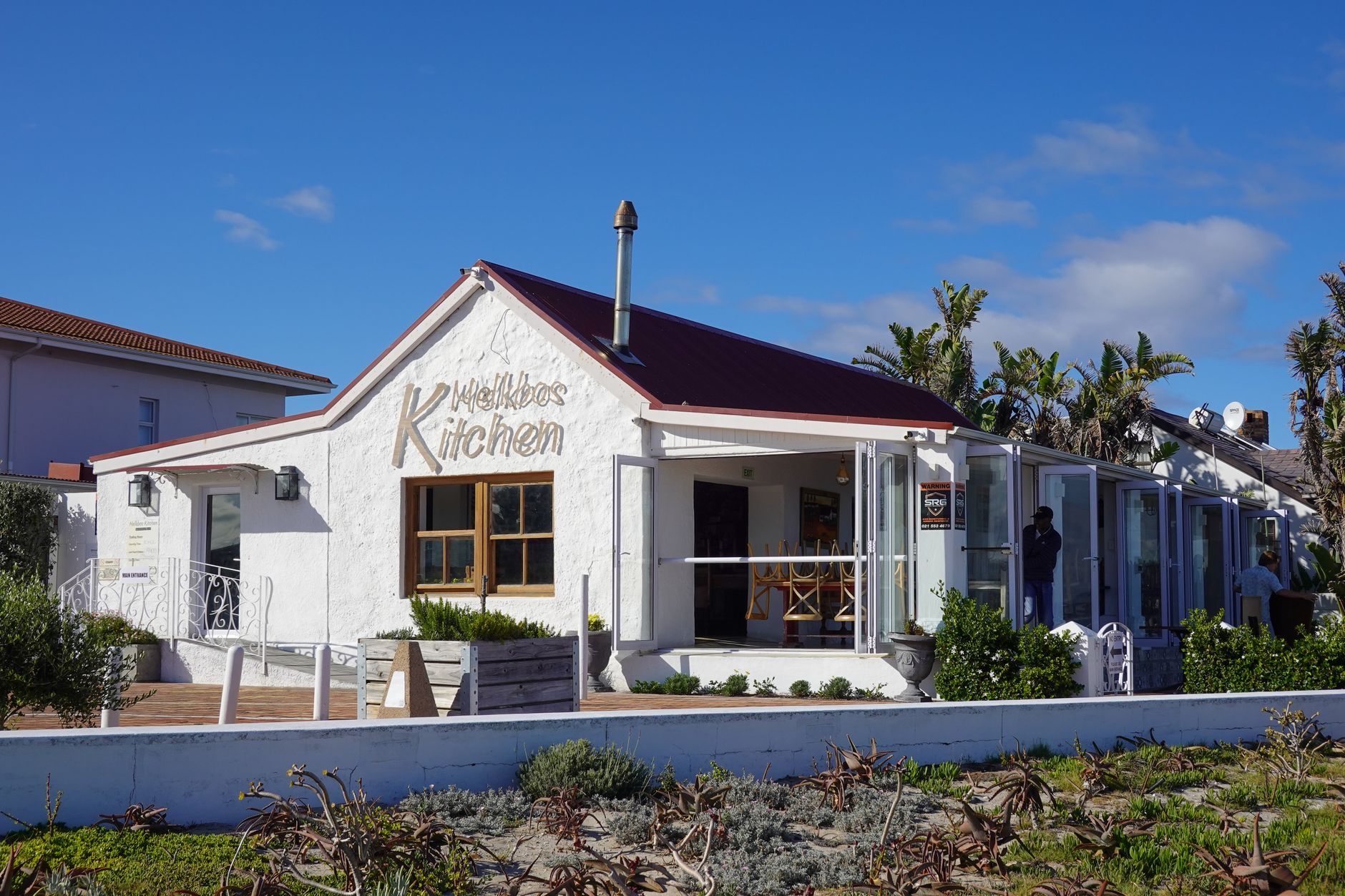
Featured image: Melkbos Kitchen, a Melkbosstrand seafront restaurant by Magda Ehlers, via Pexels — Pexels License (free commercial use)