Six legal crayfishing days remain in the 2025/26 season. That is the whole story in one line, and if you have not yet bought a permit, you still have time to fish every one of them. The recreational West Coast rock lobster season no longer runs for months the way older Capetonians remember it: this season the Department of Forestry, Fisheries and the Environment (DFFE) allocated exactly twelve open days between 20 December and 22 March, and half of them have already passed. What follows is everything you need for the days that are left: the dates, the permit, the limits, and the reasons the rules are as tight as they are.
The remaining open days
The full 2025/26 season was gazetted at twelve days: 20, 21, 27 and 28 December 2025; 3, 4, 24, 25 and 31 January 2026; 1 February 2026; and 21 and 22 March 2026. As of mid-January, these are the days still to come:
- Saturday 24 January
- Sunday 25 January
- Saturday 31 January
- Sunday 1 February
- Saturday 21 March (Human Rights Day)
- Sunday 22 March
On open days you may fish from 08:00 to 16:00 only, and your catch must be landed, meaning out of the water and on shore, by 16:00. Fishing on any date not listed above is illegal, full stop. The department chose these dates around weekends, public holidays and favourable tides, so expect the rocks and launch sites from Blouberg to Melkbosstrand to be busy on every one of them.
The permit: cost, where, who needs one
Anyone aged 12 or older needs a valid recreational West Coast rock lobster permit before touching a crayfish. That applies if you are diving, working a hoop net or simply carrying the catch up the beach. Two ways to get one:
- Online at DFFE’s e-permitting platform, fishing.dffe.gov.za. You register, pay and receive the permit digitally. Locals report the site behaves best in Chrome; give yourself a day or two rather than trying at 07:45 on an open morning.
- At the Post Office, over the counter at participating branches. Take your ID.
The permit costs R94 for the season as of January 2026; confirm the exact fee when you pay, as it is adjusted from time to time. One permit covers the whole season, so a January purchase still buys you all six remaining days. Keep it on you (printed or on your phone) whenever you are fishing or transporting crayfish. Fishery control officers do patrol this coast on open days, and being permitless with kreef in hand is an expensive conversation.
The rules that get people fined
The limits are simple but strictly enforced, and ignorance is not accepted as a defence.
- Bag limit: four per person per day. Not four per dive, not four per trip. Four.
- Transport limit: twenty per vehicle or boat, and only if the permit holders who caught them are present. You cannot ferry a syndicate’s catch home on your own.
- Minimum size: 80 mm carapace length, measured from the tip of the horn between the eyes to the rear edge of the body shell, where the tail begins. Buy or borrow a proper gauge; eyeballing it is how people end up in court. Undersized lobsters go back immediately.
- Berried females go back. Any female carrying eggs under the tail must be released at once, regardless of size.
- Transport them whole. Tailing a crayfish before you get home is an offence, because it makes size checks impossible.
- No selling. A recreational permit is for personal consumption only. Selling your catch, even to a neighbour, moves you into poaching territory.
Legal methods
You may catch crayfish by hand while freediving with a mask, fins and snorkel, or with a ring net (hoop net) or scoop net worked from shore or from a licensed boat. Scuba and any other artificial breathing apparatus are prohibited for crayfish, no exceptions. If you see divers with cylinders bringing up kreef, you are watching a crime.
Fishing this stretch of coast
The coastline from Bloubergstrand past Melkbosstrand and on towards Silwerstroom is classic recreational kreef water: cold, kelpy reef within reach of shore. Freedivers work the kelp gullies at low tide, hoop-netters fish baited rings off the rocks, and small boats run nets over the deeper reef. If you are new to it, go with someone who knows the area, because the challenge here is rarely finding crayfish; it is the sea itself.
January and February sit in the heart of the southeaster season, and a few days of hard summer wind drives upwelling that can drop inshore water temperatures below 12°C while leaving the surface deceptively calm. Wind against tide also builds chop quickly over the shallow reefs. Check the forecast the night before and again at first light; our guide to when Cape Town’s wind season starts and ends explains why late summer mornings are usually your best window. A wetsuit is not optional in this water, and neither is a dive flag if you are swimming beyond the surf line. History-minded fishers can make a day of it: the reefs below the ridge where the Battle of Blaauwberg was fought in 1806 have fed this coast for far longer than the city has existed.
One more check before you get wet: make sure your spot is not inside a marine protected area or other closed zone. Restricted areas are listed in your permit conditions; read them, because “I didn’t know” carries no weight with an inspector.
Why only twelve days? The context nobody explains
The short season is not bureaucratic meanness. West Coast rock lobster is one of South Africa’s most depleted marine resources. Scientific assessments put the stock at roughly 1.4% of its estimated 1910 level, a marginal recovery from the historic low of 1.1% recorded in 2023. Commercial catches that peaked near 18,000 tonnes a year in the early 1950s have shrunk to a total allowable catch of 800 tonnes for 2025/26. That figure is actually up sharply from last season’s 505 tonnes, the biggest proportional increase in fifteen years, which the department presents as cautious evidence of stabilisation.
Recreational fishers get a sliver of that: about 24 tonnes, or 3% of the total. The real pressure on the resource is illegal harvesting. Researchers estimate the poached take at roughly double the entire legal TAC, and the department’s own scientific working group has said that cutting poaching is the single most urgent step for the species’ recovery. Announcing the season, Minister Willie Aucamp described the dates as the product of a science-based assessment balancing recreational access against long-term sustainability. You can debate whether twelve days is the right number, but the arithmetic behind it is real: every undersized or berried kreef that goes back over the side is a small vote for there being a season at all in 2036.
Frequently asked questions
Can I still buy a permit halfway through the season?
Yes. The permit is valid for the whole 2025/26 season regardless of when you buy it, and buying in January still covers all six remaining open days.
Do children need a permit?
Anyone 12 and older needs their own permit to catch, carry or transport crayfish. Children under 12 may not obtain a permit, so they cannot legally contribute to the day’s bag.
Can I dive for crayfish with scuba gear?
No. Only freediving with a snorkel is allowed. Any artificial breathing apparatus is prohibited for West Coast rock lobster, from shore or boat.
What happens if the weather is bad on an open day?
Nothing changes. The gazetted dates are fixed, and lost days are not automatically replaced, so if the southeaster blows out a weekend, that opportunity is simply gone. This is why locals watch the forecast obsessively in the week before each open date.
Can I catch crayfish at night on an open day?
No. Legal hours are 08:00 to 16:00, and the catch must be on shore by 16:00. Anything outside that window is illegal even on a listed date.
How do I measure the 80 mm minimum?
Carapace length runs from the tip of the horn between the eyes to the rear edge of the main body shell, not including the tail. Cheap plastic gauges are sold at tackle and dive shops; carry one in your net or wetsuit sleeve and measure before the crayfish goes in the bag.
Sources & further reading
- DFFE: Recreational fishing dates for the 2025/26 West Coast rock lobster season
- Government Gazette No. 53739: West Coast Rock Lobster Fishing Season Amendment (28 November 2025)
- GroundUp: Let them eat kreef!
- Overstrand Municipality: Crayfish season open dates
- Dive Team Cape Town: West Coast Rock Lobster Season 2025/2026
- EWN: West Coast rock lobster fishing quota increases for 2025/2026 season
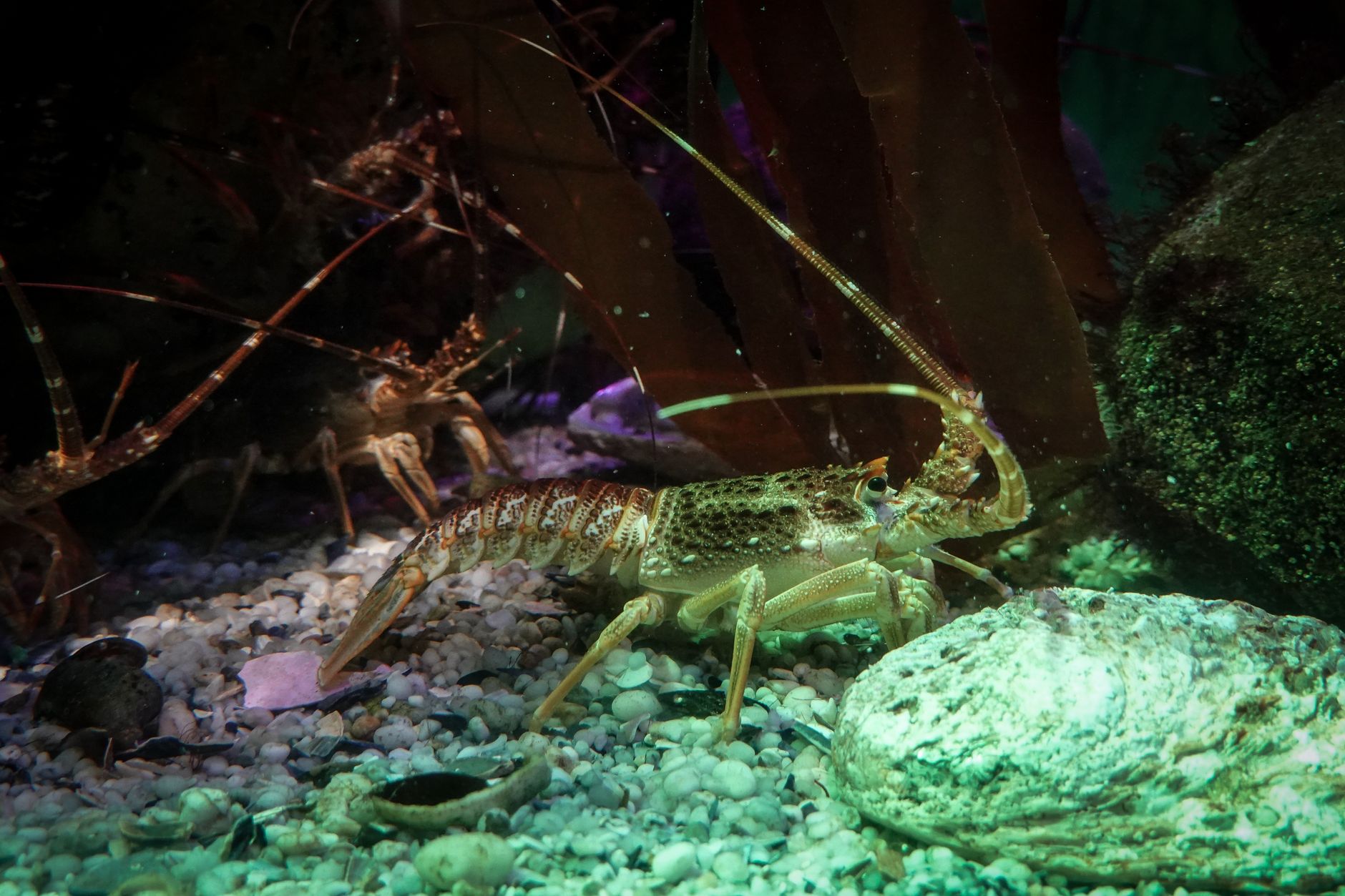
Featured image: Vivid underwater shot of crayfish amidst pebbles and seaweed in an aquarium setting. by Magda Ehlers, via Pexels — Pexels License (free commercial use)