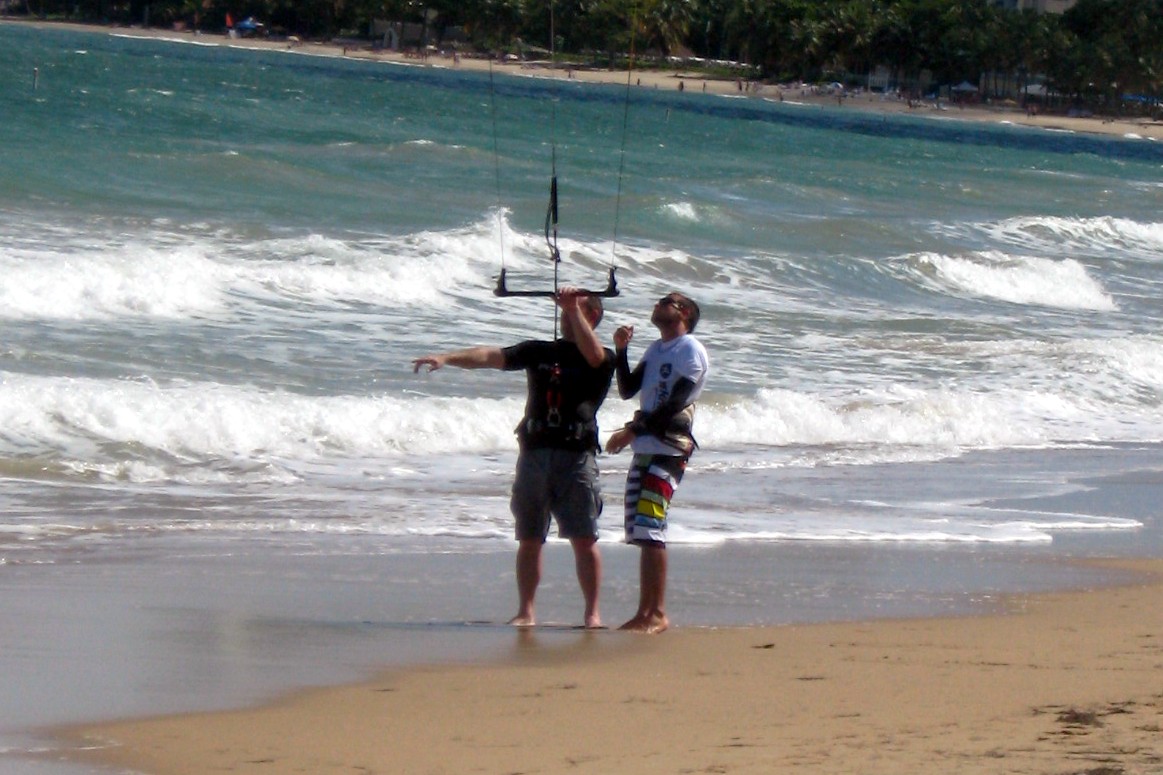
Every summer, Blouberg’s beachfront fills with people who decided in December that they wanted to learn to kitesurf — and then discovered that December is the worst possible month to start. The wind is at its most violent, the schools are at their busiest, and lesson slots vanish. The smart move is the one almost nobody makes: book in September, start in October, and be riding by the time the serious wind arrives. This guide covers what that actually costs, how many hours you genuinely need, and how to choose between the schools strung along the Table View and Blouberg beachfront without relying on their own brochures.
First, the honest framing. Blouberg (covered in full in our complete area guide) is one of the best-known kitesurfing destinations on earth, which is precisely why it hosts Red Bull King of the Air. That reputation is built on wind strength, not beginner-friendliness. Kite Beach at Table View serves up side-onshore southeasterly wind with Atlantic swell and genuinely cold water; you’ll be in a thick wetsuit even in February. None of that makes it a bad place to learn (the instruction here is world class because the conditions demand it), but it does mean the school you pick and the month you start matter more than they would on a flat, warm lagoon.
What lessons cost, as of September 2026
Prices below are ranges gathered from schools operating in the Blouberg and Table View area in September 2026. Treat them as a sanity check, not a quote: most schools adjust rates each season, several charge international visitors more than South African residents, and packages differ in what they bundle. Euro figures use roughly R19 to the euro, the rate as this was written.
| What you’re buying | Typical hours | Rand | Euro (approx.) |
|---|---|---|---|
| Taster / first lesson (group) | 2–3 | R1,050 – R2,800 | €55 – €150 |
| Single private lesson | 2 | R1,650 – R2,800 | €85 – €150 |
| Beginner course to first board starts | 5–6 | R2,050 – R4,800 | €110 – €250 |
| Full course towards independence | 9–15 | R2,850 – R11,300 | €150 – €600 |
| Your own starter gear, new | — | from around R30,000 | from €1,600 |
Those ranges are wide, and the spread is real, not sloppy research. At the budget end sit group courses at a 2:1 student-to-instructor ratio, sometimes priced for locals; at the top end sit fully private tuition and premium schools with newer gear and radio helmets. A useful trick: divide any package price by its hours before comparing. A “three-day course” from one school might be nine hours on the water while another’s is six, and the per-hour figure exposes padding instantly. On that maths, expect to pay somewhere between roughly R270 and R1,400 per hour depending on ratio and school, and be suspicious at both extremes.
Everything you need (kite, board, harness, wetsuit, helmet, impact vest) is included in lesson prices at every reputable school. Do not buy gear before you can ride. The kite size that suits a 90 kg beginner in 25 knots is not the kite you’ll want a season later, and the secondhand market in Cape Town every autumn is full of barely used gear sold by people who bought too early.
How many hours before you’re actually riding
The number the industry doesn’t put on the front page: most people need 9 to 15 hours of instruction to become an independent rider: someone who can set up, launch, ride both directions, stay upwind and get back to the beach without help. The progression is fairly predictable. Kite control on the beach and in the water eats your first three hours or so. Body-dragging — being pulled through the water without a board, which is also how you’ll retrieve a lost board forever after — takes you to around hour five or six, when the first board starts happen. The stretch from “stood up briefly” to “rides upwind and comes home” is the long tail, and it’s where the cheap six-hour courses quietly end.
So budget realistically: a taster lesson tells you whether you’ll love it for under R3,000, but the honest all-in figure from zero to independent is roughly R4,000 to R11,000 in group lessons, more if you go fully private. Two more things nobody mentions. Lessons are sold in hours but delivered in wind: a “three-day course” means three windy days, which in a fickle week can stretch across two. And progress is not linear: almost everyone has one session where nothing works. That’s normal, not a sign you should quit.
Private or group? Group lessons at 2:1 are genuinely fine for the early kite-control stages, where you learn plenty watching the other student’s mistakes. If budget allows, the ideal split is group hours early, then a private session or two at the board-start stage, where one-on-one attention pays off most.
How to compare schools without falling for the brochure
Every school’s website says the same things: passionate instructors, top equipment, safety first. Ignore the adjectives and interrogate the specifics:
- Ratio, in writing. “Group lesson” should mean a maximum of two students per instructor in Blouberg’s conditions. Three or more sharing one kite means you’re paying to stand on a beach.
- Accreditation. Look for IKO or VDWS affiliation. It’s not a guarantee of great teaching, but it standardises the safety syllabus, and an IKO certification card is what lets you rent gear at spots worldwide afterwards.
- Radio helmets. Once you’re in the water, an instructor shouting from the beach is useless. Schools that coach through helmet radios get you riding noticeably faster. Ask directly.
- The no-wind policy. What happens to your booked, paid lesson when the southeaster doesn’t show? Good schools roll unused hours forward without penalty. Get the policy before you pay, especially if you’re on a fixed holiday window.
- Where they’ll actually teach you. Some Blouberg schools also run sessions at Langebaan’s lagoon, about 90 minutes up the R27, and will take beginners there on days when the ocean at Kite Beach is too lively. Flexibility across spots is a genuine advantage, not upselling.
- Gear age. Kites more than two or three seasons old relaunch worse and depower less predictably. You’re allowed to ask what year the school’s kites are.
- Season dates. Some local schools close entirely from April to September and only reopen for the season in October or November. If a school answers its phone in mid-September and can talk you through October availability, that’s your booking window working exactly as it should.
One deliberate omission: this guide names no school as “the best”. Instructors move between schools every season, and last summer’s standout can be this summer’s disappointment. The criteria above outlive any ranking.
The wind window: when a beginner should book
Blouberg’s season runs roughly October to April, driven by the southeasterly trade wind locals call the Cape Doctor. We’ve written a full explainer on why Cape Town howls in summer. The crucial nuance for learners is that the season has a shape. December and January are the throat of it: multi-day blows in the 30–40 knot range, which is King of the Air weather, not learn-to-fly-a-kite weather. Schools still teach through peak season, but you’ll lose more sessions to “too much wind” than you’d expect.
The beginner-friendly windows sit at the shoulders: mid-October to late November, and again late February through March, when the southeaster blows often enough to fill a course but more frequently in the teens and low twenties of knots. Booking now for an October or November start is genuinely the best decision available to you. You’ll learn in kinder wind, at quieter schools, and be independent before the December circus arrives. Within any given day, the pattern is thermal: mornings often start still, with the wind line creeping down the coast and filling in from midday. You can watch that happen in real time on our live Blouberg weather station, which is a better guide to whether this afternoon’s lesson will run than any national forecast.
Frequently asked questions
How much should I budget in total to learn from scratch?
Plan on R4,000–R11,000 for enough group instruction to reach independence, as of September 2026. Add nothing for gear yet because schools provide everything, but expect upwards of R30,000 later if you fall in love and buy your own setup new, considerably less if you shop the autumn secondhand market.
Can I learn in a single weekend?
You can get through kite control and body-dragging, and possibly stand up on the board, in a windy weekend. You will not be an independent rider in two days, and any school promising that is selling you a story. Two weekends with a bit of practice between them is a realistic minimum.
Do I need to be fit, or a strong swimmer?
Moderate fitness and basic swimming confidence are enough. The harness, not your arms, takes the kite’s pull. The real physical demand at Blouberg is the cold Atlantic. Schools supply thick wetsuits, and you’ll want the full session’s concentration more than raw strength.
Is it worth starting in December instead?
Only if that’s the one window you have. Expect stronger wind, fuller schools and more cancelled-for-safety sessions. If you’re visiting in peak season anyway and the wind is beyond lesson strength, there’s plenty else on; we keep a running list of things to do in Blouberg when the southeaster is howling.
Sources & further reading
- High Five Kitesurf School — Lessons & Pricing, Blouberg
- SA Kitesurf — Prices & Bookings, Cape Town
- Coastline Kitesurfing — Lessons Cape Town (Blouberg & Langebaan)
- Cycloscope — Kitesurfing Lessons in Cape Town: Where, Why & How Much
- Progression Sports — Tips for Kitesurfing in Blouberg, Cape Town
- Kite Centre Zanzibar — How Long Does It Take to Learn Kitesurfing?
- KitesurfRiders — Blouberg Kitesurfing Beach, South Africa
Featured image: Kitesurfing lesson at a beach in Carolina, Puerto Rico by Alan Kotok, via Openverse (wikimedia) — BY 2.0